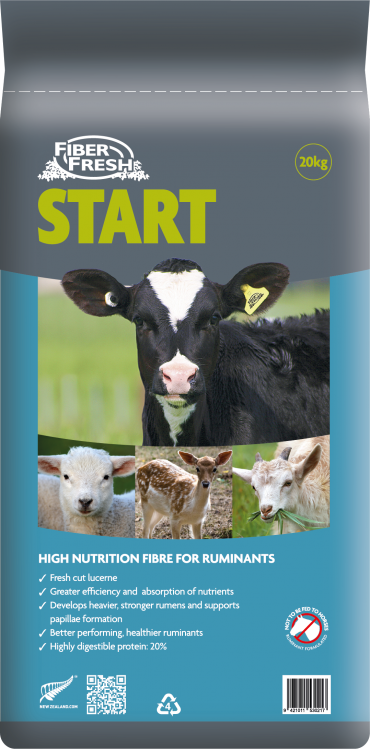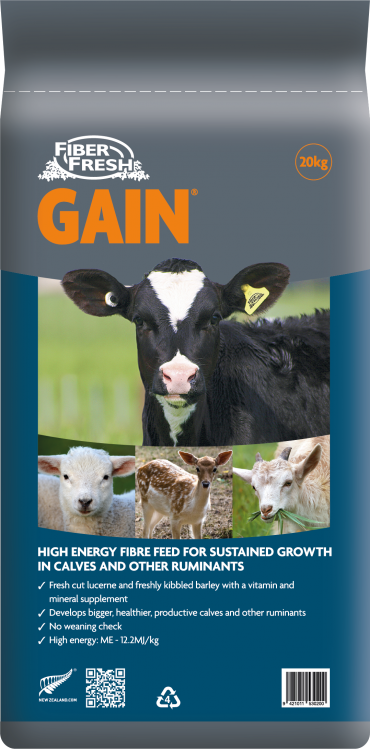
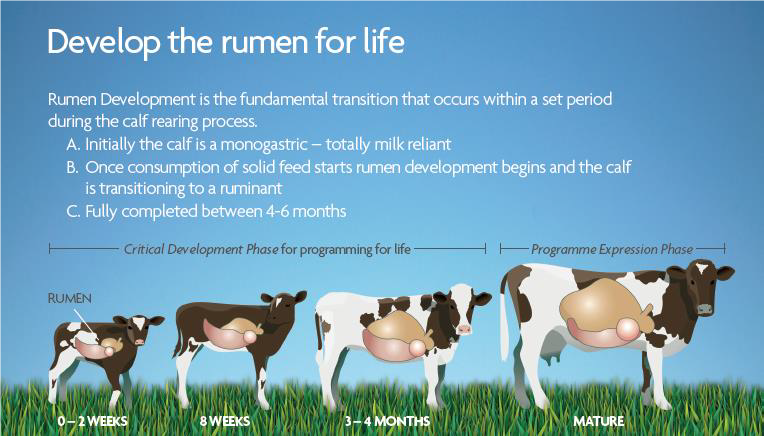
Getting calves onto the right kind of nutrient-dense natural fibre in the first week of their life helps to take calves from being totally milk-reliant animals, to ones that can quickly thrive and develop to their full potential on pasture.
Every day counts when it comes to getting calves off to a good start with the inclusion of Fiber Start® or Fiber Gain® in their diet. WHY?
- Introducing quality digestible fibre early will encourage faster rumen and papillae development
- This allows calves to transition and develop on grass much faster
- It also leads to life-long benefits to health and production
Maximum rumen development occurs between four and 10 weeks and this is where fibre, such as that found in Fiber Fresh’s Fiber Start® or Fiber Gain®, brings the maximum benefit. By feeding fibre during this time, the calf is following a natural path of development with an easily digested fibre that lays down gut health for the remainder of the animal’s life.
There is no comparison or other fibre-based calf feed in the market which offers the same benefits to the growing calf as Fiber Start® and Fiber Gain®. The likes of straw or hay simply do not provide the same type of nutritional value and only serve to fill up the rumen, taking away valuable space for energy and protein-rich feeds essential for maximum calf growth. Calves should be introduced to Fiber Start® (or Fiber Gain®), as early as possible, while they are still on milk and/or alongside any concentrate or cereal-based meal (if using Fiber Start®).
Calves will initially only consume small quantities, but early adaption to the taste and texture allows them to gear up for higher intakes. As a guide, they will be eating about 2kg/day per calf of Fiber Gain® (as fed), as weaning approaches.
Controlled published studies (McCoard et al. 2019), show comparable growth rates when a traditional milk/pellet-based ration and a milk/Fiber Start®/Fiber Gain® ration were compared. Fiber Fresh feeds are research-based and are a culmination of 25 years of trials to develop advanced processes that result in high-quality fibre products.
Better calf development will lead to better, more productive replacements. That means cost savings for the farmer, but just as importantly, it leads to better long-term results, especially in pasture-based systems, while calves will also better utilise solid feeds more rapidly.